
How can we empower drivers to identify and report suspected human trafficking?
U.S. Department of Transportation


U.S. Department of Veterans Affairs
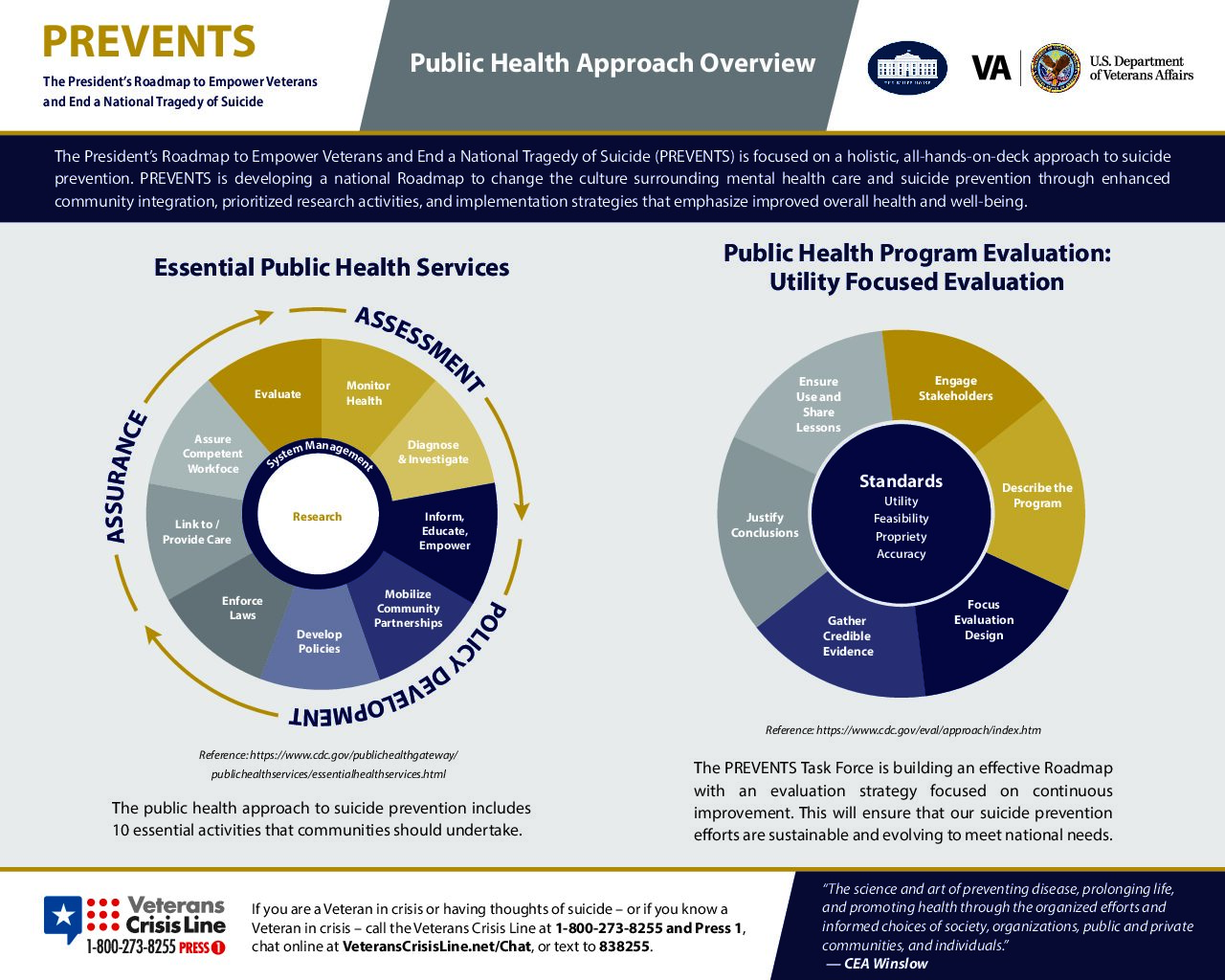
While suicide impacts all members of society, the unique challenges emanating from a life of service put veterans and service members at an increased risk. Halting the alarming number of deaths by suicide among veterans became a national priority. In 2019, the Department of Veterans Affairs (VA), the White House, and other federal agencies formed an alliance that led to the development of the President’s Roadmap to Empower Veterans and End a National Tragedy of Suicide (PREVENTS). VA recognized the need to change the knowledge, attitudes, and behaviors related to well-being among the general population, as well as veterans and service members. A strategy for communicating information about the availability of health care with difficult-to-reach subpopulations of veterans that had the highest number of suicides was essential. These populations included:
For these groups, it was especially important that information about health care and services was delivered in ways that acknowledged their commitment to mission, while giving them a sense of community. With no time to waste, VA selected DCG to launch REACH, a first-of-its-kind national public health campaign.
Leveraging its 10 years of veteran suicide prevention experience and extensive research, DCG developed a comprehensive communications strategy for REACH. Components of this campaign included:
Demographic and psychographic information determined which messages and topics were delivered to each at-risk audience. Paid media channels included:
As part of the paid media campaign, DCG produced seven videos, including two public service announcements, one of which won a Bronze Telly for Social Impact. The custom website REACH.gov, developed by DCG, provided information and resources for visitors following up on all calls to action.
To amplify REACH messaging and facilitate stakeholder support, DCG created toolkits with talking points, sample newsletters, social media posts, and REACH-branded graphics for use across VA, DoD, and other federal and non-federal agencies. In-depth analysis of policies and research data led to the development of papers, Congressional briefing materials, slide decks, talking points, and strategic guidance for Members of Congress and House and Senate Committees, building widespread support for PREVENTS objectives. Within two years, the REACH campaign became one of the largest public efforts undertaken by the federal government.



U.S. Department of Transportation

U.S. Department of Homeland Security

U.S. Department of Veterans Affairs

U.S. Department of the Army